Showing posts with label minimalism. Show all posts

Friday, August 21, 2009

Four Organs - Steve Reich (1970)

it starts with an innocent maracas player, alone in his robotic, unaccented shaking for almost four seconds. but, even though the shaking continues nonstop and steady for the rest of the fifteen minute song, the shaking is never left alone again for longer than a moment.

that's because at 0:04, the organs come in. four organs, to be exact. and when they do, you know it's Steve Reich minimalism at its finest.

i don't know anything about music, so i'll let Wikipedia describe exactly what happens in this song from start to finish: "the four organs, harmonically expound a dominant eleventh chord (D-E-F#-G#-A-B with an E in the bass), dissecting the chord by playing parts of it sequentially while the chord slowly increases in duration from a single 1/8 note at the beginning to 200 beats at the end."

now, to make this a little more visual, Reich's vision for the piece (as given at the premiere): "I had the idea that if a group of tones were all pulsing together in a repeating chord...one tone at a time could gradually get longer and longer.... The tones would simply begin in unison...and then gradually extend out like a sort of horizontal bar graph."

playing on organs popular in rock & roll at the time (think The Doors), the organists play longer and longer, more and more sustained tones, building on top of each other the entirety of the song. one chord. one chord the whole time. one chord over and over and over again. one chord, in the beginning, just an eighth note. then a quarter note, half note, whole note. one chord played for minutes at a time, by the end of the piece. with the omnipresent shaking as a foundation, they construct an upside down pyramid, working their way to textures so thickly layered that at one of the early performances, they nearly drove a poor old lady to insanity.

allmusic describes the first couple performances of the piece in 1971, when "Imagine," "My Sweet Lord," "Maggie May," and "Brown Sugar" were the world's biggest hit singles:

In 1970, Reich received a phone call from the conductor Michael Tilson Thomas asking for some new orchestral repertory, and he jokingly responded, 'Of course, my new piece Four Organs." To his great surprise, Tilson Thomas agreed to Reich's suggestion. While it was anything but symphonic, Four Organs was performed by the Boston Symphony in Boston's Symphony Hall in October, 1971, along with works by Mozart, Liszt and Bartok. The stoic New England audience took the work in stride, but a more volatile New York audience was less approving when it came to Carnegie Hall in 1973. Shouts, boos, cheers, threats and counter-threats by patrons broke out during the performance, and one elderly lady even banged her shoe on the edge of the stage in an attempt to stop the music. The New York Times critic Harold Schonberg reported that "the audience behaved as though red-hot needles were being inserted under fingernails." Nevertheless, Reich soon became a hot commodity and his reputation took off soon after the notorious concert.

as Meryl expressed last night, by comparing this reaction to that of Edouard Manet's Olympia, which also sparked controversy when it was shown in 1863, it seems that there's something to pieces of art that make people want to tear it to shreds. she said, "if your art upset a lot of people, you're probably doing something right." i think that's exactly what happened here.


one chord, two words, three syllables, four organs, five musicians, six stars.

listen.

Monday, June 29, 2009

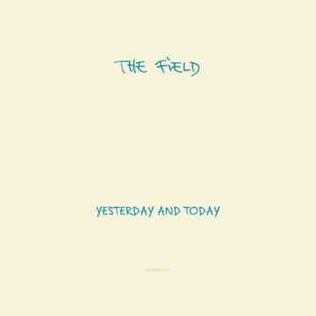
Yesterday and Today - The Field (2009)

already halfway through 2009, i figured i would begin this blog with a post about my favorite album of the year (so far).


as the album art maybe reveals, this album's all about minimalism. with his ear moving closer to Steve Reich (famous for the essential minimalist work Music for 18 Musicians), Axel Willner has completed his second ambient house masterpiece under the Field moniker. moving away from the shorter, more immediately satisfying tracks he created on his 2007 debut, From Here We Go Sublime, The Field moves closer to Reich's territory by staying in the moment of a sound longer, looping seemingly infinitely on a closed circuit track of electronic bliss.

the shortest track here is barely under seven minutes, and it's the first Field track (that i know of) to feature vocals as actual singing, instead of just the instrumental blips The Field is known for. the rest of the tracks here dabble in or around the ten-minute mark. the key track for me is number 3, "Leave It," a long piece that spins and spins and spins, morphing slowly and steadily over the loop that repeats for twelve minutes.

but i continue to have trouble describing what makes this album click for me. i think to understand it, it takes a couple loud listens on headphones. when you listen to this normally, in your room or in the car, you hear a mediocre loop repeating for far too long. in your head though, forced to listen between a pair of good headphones, you hear the nuances that help the track evolve, like a virus changing its shape over geological time. little sparkly clangs that usher in transitions, bass lines that crawl out of the water like a fish growing legs, samples of female breath that exhale perfectly on time with crisp snares.


i had the very pleasant opportunity to see The Field perform at the Mezzanine in San Francisco just a couple weeks ago, and i am so happy i attended. as the photo shows, Willner is joined on stage by a couple other musicians for this tour, who took some load off Willner's job by covering some of the bases. awesomely, one of the other bandmembers actually played bass in a couple of the songs, bringing a wonderful organic vibration to the electronic thump.

if you are wondering what the title of the first track means, you are not alone. i asked Willner after the show what it meant and all he did was chuckle, saying, "it's a joke between me and my girlfriend." don't forget that humans make electronic music and human music rarely comes up with new topics.

1. I Have the Moon, You Have the Internet (8:02)
2. Everybody's Got to Learn Sometime (6:51)
3. Leave It (11:37)
4. Yesterday and Today (10:08)
5. The More That I Do (8:36)
6. Sequenced (15:42)

download or buy